
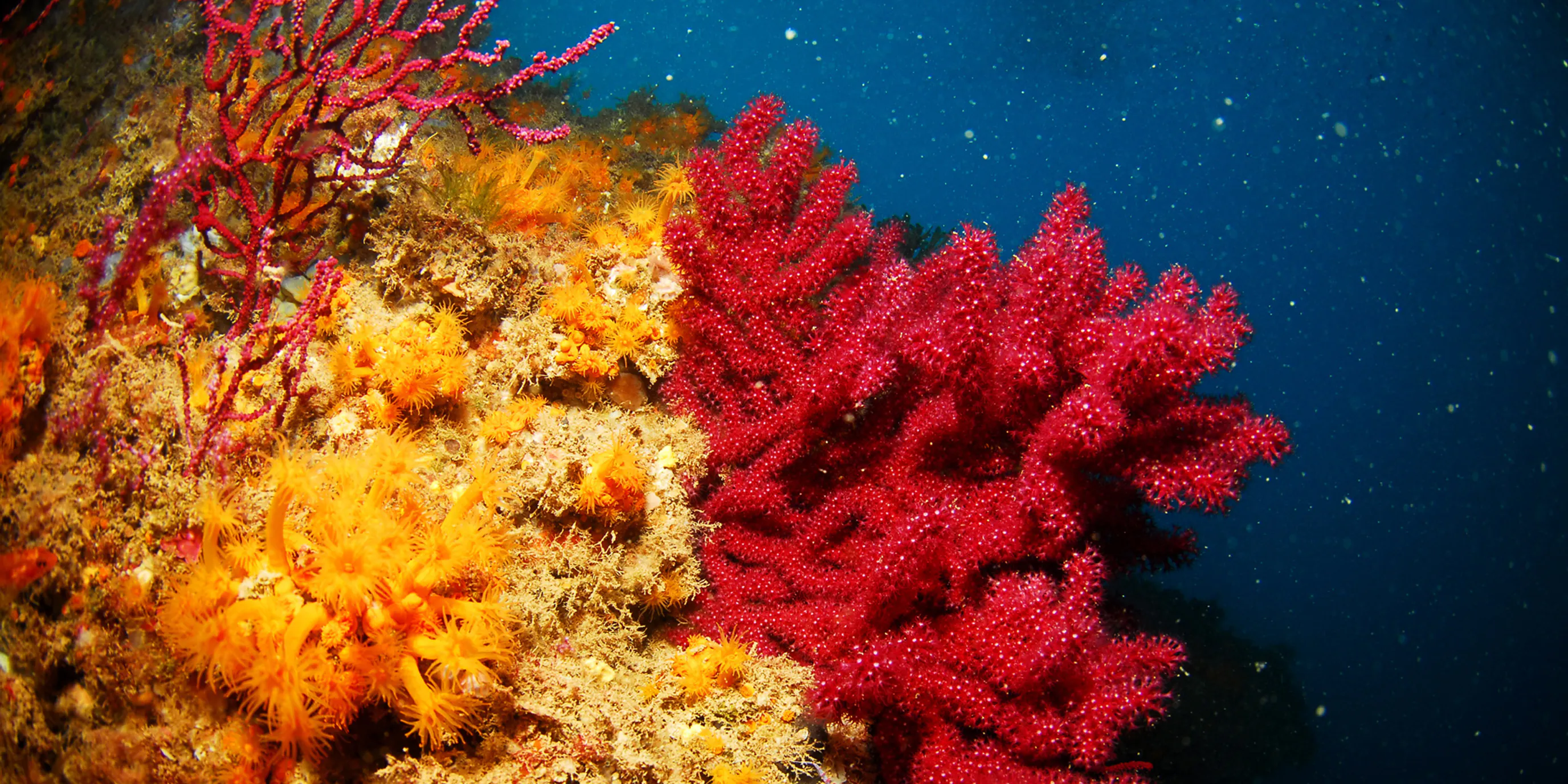
The Mediterranean Sea harbours some of the world’s richest hotspots of biodiversity: coralligenous reefs. Home to over 1700 species, these unique ecosystems are at risk of irreversible damage from bottom trawlers and agricultural runoff.
In 2024 and 2025, environmental NGOs Oceana and ClientEarth filed legal action against the Spanish government for issuing fishing licences generally allowing bottom trawling to take place in Spanish Natura 2000 sites, without any assessment of the impacts of such activities. This violates both Spanish and EU nature conservation legislation. The cases are ongoing.
Vice President and Minister for Ecological Transition Sara Aagesen announced at the 2025 UN Ocean Conference the approval of 40 pending management plans by July 2026. Ten of these correspond to the largest marine Natura 2000 protected areas and are being developed under the LIFE IP INTEMARES project, worth EUR 50 million in public funding. However, to date, none of these 10 management plans have been approved by Spain and in several cases they are delayed by more than the legal six-year deadline, leaving vulnerable species and habitats without effective protection.
Spain has committed to protecting 30% of its waters by 2030, with 10% under strict protection, as part of its international biodiversity commitments. Yet, these targets cannot be achieved without proper fisheries management and while bottom trawling continues to be systematically allowed inside its marine protected areas. Learn more about ongoing legal action here.